---
title: Construction’s Software-Defined Moment
description: "Today's topic is, of course, Construction's Software-Defined Moment: Architecture, Autonomy, and Operational Assurance Beyond Automotive. #CONEXPO"
image: https://lhpoas.com/hubfs/Screenshot%202026-02-27%20at%2012.20.01%20PM.png
---
4 min read
# Construction’s Software-Defined Moment
[ Marty Muse ](https://lhpoas.com/lhp-oa-systems-blog/author/marty-muse) : Feb 27, 2026 1:05:46 PM
[SOTIF](https://lhpoas.com/lhp-oa-systems-blog/tag/sotif) [ISO 26262/Functional Safety](https://lhpoas.com/lhp-oa-systems-blog/tag/iso-26262-functional-safety) [Operational Assurance](https://lhpoas.com/lhp-oa-systems-blog/tag/operational-assurance) [SDV](https://lhpoas.com/lhp-oa-systems-blog/tag/sdv) [ConExpo](https://lhpoas.com/lhp-oa-systems-blog/tag/conexpo)
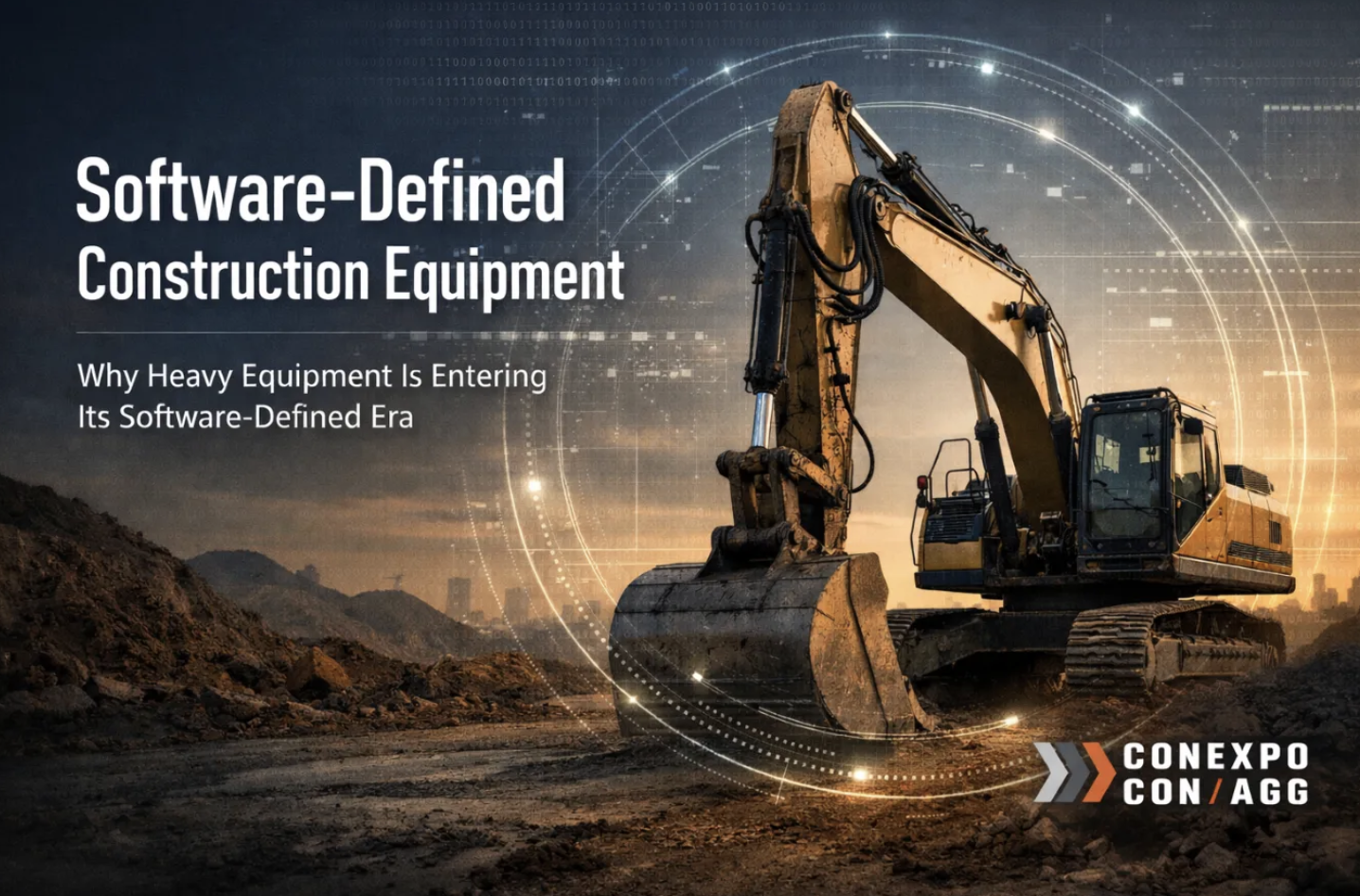
Construction’s Software-Defined Moment
8:13
## Construction's Software-Defined Moment
*This blog was [originally posted](https://mikeentnergomez.substack.com/p/constructions-software-defined-moment) by Michael Entner-Gómez on his Substack on 2/13/26. *
With CONEXPO happening soon, I thought it would be good for our audience to see this content as well. Today's topic is, of course, Construction's Software-Defined Moment: *Architecture, Autonomy, and Operational Assurance Beyond Automotive. *Let's dive in!
With CES 2026 behind us and the annual surge of automotive announcements settling into longer-term roadmaps, attention naturally shifts to what comes next in the evolution of physical autonomy.
This year, my focus expands beyond automotive to explore critical adjacencies. I will be attending [CONEXPO-CON/AGG 2026 in Las Vegas](https://www.conexpoconagg.com/) to engage with industry leaders navigating the shift toward software-defined technologies and confronting the growing need for a more mature model of operational assurance.
Over the past decade, the automotive industry has undergone a structural transformation centered on the Software-Defined Vehicle (SDV). Compute architectures have steadily centralized. Software has progressively decoupled from hardware lifecycles. Over-the-Air (OTA) updates have enabled continuous deployment strategies. Digital twins and fleet-level data feedback loops have reshaped how vehicles are monitored, maintained, and improved throughout their operational lives.
Autonomy has been the visible headline, but the deeper shift has been architectural. The real transformation occurred in how systems are designed, validated, updated, and governed over time, and construction equipment is beginning to exhibit early signals of that same architectural evolution.
Steel and hydraulics remain foundational, yet competitive differentiation is increasingly influenced by software architecture, data integration, and the capacity to manage autonomous functionality safely at scale. The transition may still be in its early stages, but the parallels to automotive system design are becoming increasingly apparent.
### **Rapidly Approaching the Labor Cliff**
### The industry faces a projected shortfall of 349,000 net new workers in 2026, a figure driven largely by an accelerating retirement wave. At the same time, project pipelines continue to expand, fueled by major infrastructure and industrial initiatives. Productivity expectations are rising as experienced labor becomes harder to replace and project complexity increases.
These pressures are accelerating investment in automation, robotics, and increasingly capable AI-driven systems. The industry is moving beyond “Generative AI” pilots toward “Agentic AI”—systems capable of observing their surroundings, planning actions, and making decisions in connected ecosystems.
As these systems move from pilot deployments to decision-making autonomy, the burden shifts from capability development to assurance governance.
At CES, humanoid robots captured significant attention as companies showcased increasingly capable general-purpose mobility and manipulation. Whether that flexibility can translate into economically viable deployment on complex jobsites remains an open question. Construction and agriculture have historically favored specialization, shaped by demanding operating conditions and tight margins that reward reliability and task-specific efficiency. Regardless of the form factor, equipment is expected to operate with increasing autonomy in environments originally designed for human workers.
### **From Isolated Tools to Connected Intelligence**
### Autonomous machines represent only one visible layer of a broader transformation. Jobsites are steadily evolving into connected ecosystems where Information Technology (IT) and Operational Technology (OT) converge. Fragmented tools are giving way to Common Data Environments (CDE) that unify design models, telematics, and field execution feedback into a shared operational framework.
Unlike automotive fleets, construction environments are highly fragmented and multi-brand. A single jobsite often includes equipment from multiple manufacturers, spanning different generations of hardware and software.
In this heterogeneous reality, the traditional “validate once, deploy forever” model is obsolete. True Operational Assurance (OA) requires a continuous, closed-loop architecture in which field data validates safety margins in real time, regardless of the OEM badge on the hood. It is no longer just about whether the machine can do the work; it is about verifying, with measurable evidence, that it remains within defined safety margins while doing it.
### **The Operational Assurance Gap**
### In the automotive industry, the rise of autonomous systems has led to the development of structured safety frameworks such as ISO 26262 and SOTIF (ISO 21448). These standards evolved within operating environments that, while complex, are comparatively structured and governed by established rules.
Construction operates in a fundamentally different context. Jobsites are dynamic, variable, and inherently unpredictable. Edge cases are not rare anomalies; they are a normal part of daily operations. An autonomous excavator must interpret changing terrain and unpredictable human behavior in real-time while maintaining a safe operational state.
In such environments, safety cannot rely solely on pre-deployment validation. It requires OA: a model of continuous oversight informed by real-world operational data and structured feedback mechanisms. Automotive’s experience offers a clear lesson: autonomy scales sustainably only when architecture, validation frameworks, and lifecycle governance mature in parallel with technical capability.
### **Looking Ahead**
At [CONEXPO](https://www.conexpoconagg.com/), the most visible demonstrations will likely center on robotics, connectivity, and digital features. The more consequential conversation will revolve around architecture and assurance.
As heavy equipment becomes increasingly software-defined, the center of gravity shifts from mechanical performance alone to system governance. Architecture decisions influence safety margins. Data strategies determine learning velocity. Validation models shape trust across contractors, regulators, and operators.
The machines are becoming more intelligent. The critical question for 2026 is whether our assurance frameworks are advancing at the same pace.
### About Michael Entner-Gómez
**Michael Entner-Gómez**** **is a strategist, technologist, and writer focused on the convergence of the world’s most critical infrastructure sectors: energy, transportation, and telecommunications. Using a systems-thinking approach, he helps industry incumbents and disruptors future-proof their operations, scale complex platforms, and navigate the shift to software-defined everything.
### About LHP Operational Assurance Systems
LHP Operational Assurance Systems (OAS) was spun out of LHP Engineering Solutions to address a growing gap in safety-critical, software-defined systems: certification at launch no longer guarantees safe operation over time. As complex platforms began receiving continuous software updates and evolving functionality, LHP OAS recognized that traditional "certify-once" models could not prevent runtime drift between validated safety intent and real-world behavior. Drawing on decades of leadership in functional safety, cybersecurity, and systems engineering, LHP OAS was formed to focus exclusively on extending certified intent into live environments and developed a platform, [Operational Assurance Sentinel](https://lhpoas.com/oa-sentinel), that embodies this concept. LHP's Operational Assurance Sentinel platform delivers deterministic runtime enforcement, operational assurance scoring, and tamper-evident evidence chains that transform safety from a static milestone into a continuously verifiable discipline, enabling organizations to deploy advanced autonomous and intelligent systems with measurable, provable confidence.
#### Leave a comment below. We'd love to hear your take on this subject!
- [Tweet](https://twitter.com/share)
## Additional Content
[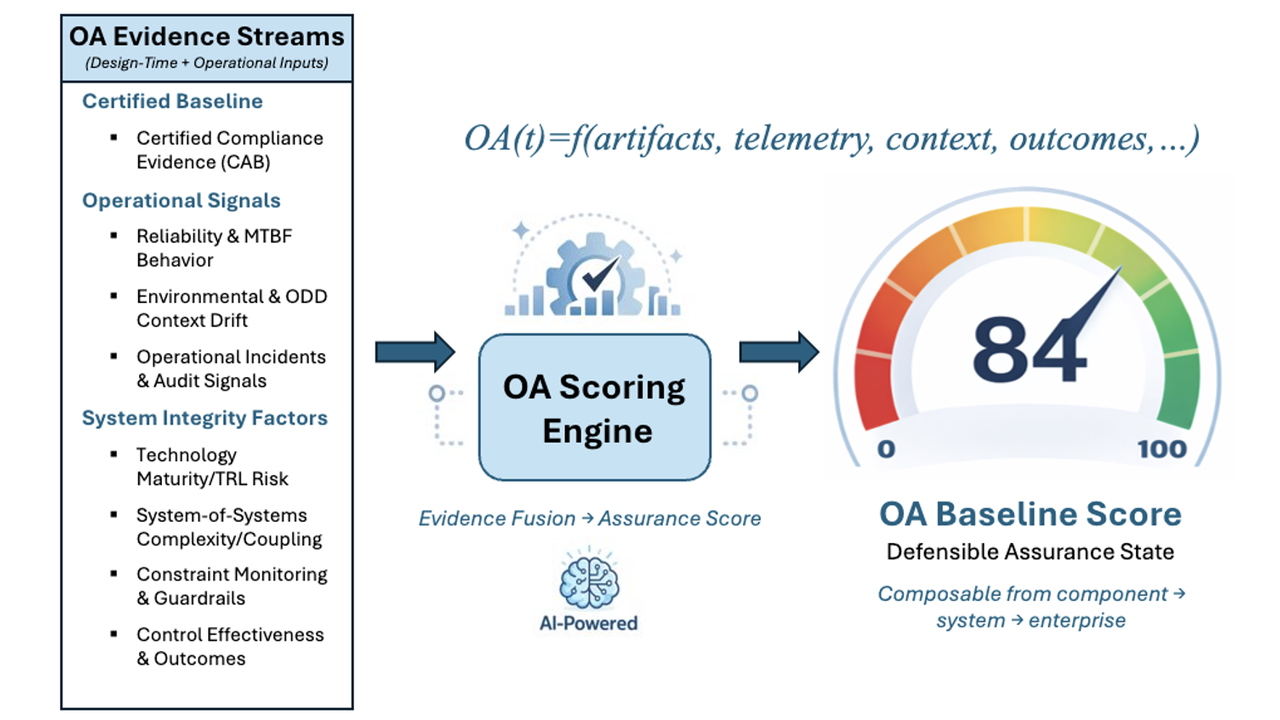 ](https://lhpoas.com/lhp-oa-systems-blog/when-safety-enforcement-becomes-control-preventing-unsafe-interventions)
#### [When Safety Enforcement Becomes Control: Preventing Unsafe Interventions](https://lhpoas.com/lhp-oa-systems-blog/when-safety-enforcement-becomes-control-preventing-unsafe-interventions)
 [Michael Entner-Gómez](https://lhpoas.com/lhp-oa-systems-blog/author/michael-entner-gomez) : Mar 9, 2026 9:02:00 AM
Blog Series: The Death of Static Safety This is the fifth part of a six-part guest blog series titled "The Death of Static Safety". For today's post,...
[Read More](https://lhpoas.com/lhp-oa-systems-blog/when-safety-enforcement-becomes-control-preventing-unsafe-interventions)
[ ](https://lhpoas.com/lhp-oa-systems-blog/keeping-the-safety-case-alive-extending-certification-into-runtime)
#### [Keeping the Safety Case Alive: Extending Certification into Runtime](https://lhpoas.com/lhp-oa-systems-blog/keeping-the-safety-case-alive-extending-certification-into-runtime)
 [Michael Entner-Gómez](https://lhpoas.com/lhp-oa-systems-blog/author/michael-entner-gomez) : Mar 11, 2026 8:32:00 AM
Blog Series: The Death of Static Safety This is the sixth and final part of a guest blog series titled "The Death of Static Safety". Today, we wrap...
[Read More](https://lhpoas.com/lhp-oa-systems-blog/keeping-the-safety-case-alive-extending-certification-into-runtime)
[ ](https://lhpoas.com/lhp-oa-systems-blog/avoiding-a-new-single-point-of-failure-designing-distributed-safety-enforcement)
#### [Avoiding a New Single Point of Failure: Designing Distributed Safety Enforcement](https://lhpoas.com/lhp-oa-systems-blog/avoiding-a-new-single-point-of-failure-designing-distributed-safety-enforcement)
 [Michael Entner-Gómez](https://lhpoas.com/lhp-oa-systems-blog/author/michael-entner-gomez) : Feb 25, 2026 1:48:29 PM
Blog Series: The Death of Static Safety This is the third part of a six-part guest blog series titled "The Death of Static Safety". Today, we dive...
[Read More](https://lhpoas.com/lhp-oa-systems-blog/avoiding-a-new-single-point-of-failure-designing-distributed-safety-enforcement)
[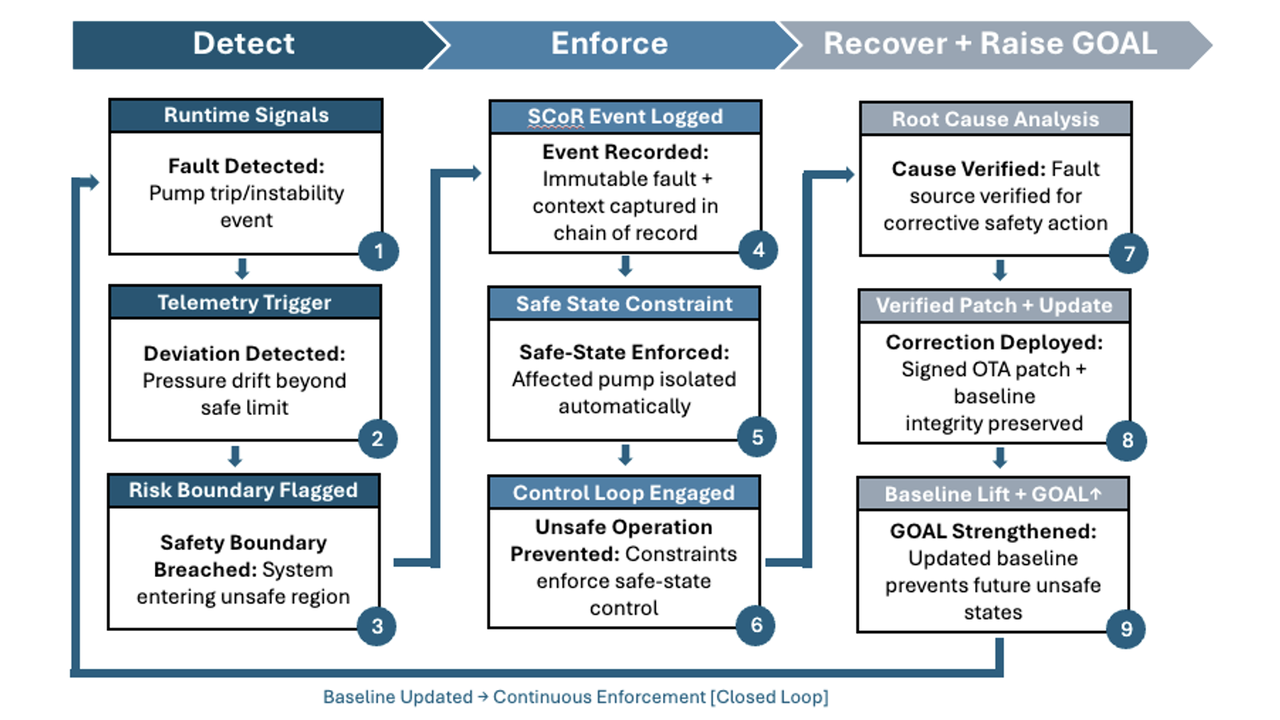 ](https://lhpoas.com/lhp-oa-systems-blog/operationalizing-continuous-assurance-without-slowing-the-machine)
#### [Operationalizing Continuous Assurance Without Slowing the Machine](https://lhpoas.com/lhp-oa-systems-blog/operationalizing-continuous-assurance-without-slowing-the-machine)
 [Michael Entner-Gómez](https://lhpoas.com/lhp-oa-systems-blog/author/michael-entner-gomez) : Mar 4, 2026 1:01:00 PM
Blog Series: The Death of Static Safety This is the fourth part of a six-part guest blog series titled "The Death of Static Safety". For today's...
[Read More](https://lhpoas.com/lhp-oa-systems-blog/operationalizing-continuous-assurance-without-slowing-the-machine)
[ ](https://lhpoas.com/lhp-oa-systems-blog/why-safety-certification-assumptions-dont-survive-reality)
#### [Why Safety Certification Assumptions Don’t Survive Reality](https://lhpoas.com/lhp-oa-systems-blog/why-safety-certification-assumptions-dont-survive-reality)
 [Michael Entner-Gómez](https://lhpoas.com/lhp-oa-systems-blog/author/michael-entner-gomez) : Feb 17, 2026 3:44:28 PM
Blog Series: The Death of Static Safety This is the first of a six-part guest blog series titled "The Death of Static Safety". We kick things off...
[Read More](https://lhpoas.com/lhp-oa-systems-blog/why-safety-certification-assumptions-dont-survive-reality)
[ ](https://lhpoas.com/lhp-oa-systems-blog/validating-operational-assurance-as-a-safety-mechanism)
#### [Validating Operational Assurance as a Safety Mechanism](https://lhpoas.com/lhp-oa-systems-blog/validating-operational-assurance-as-a-safety-mechanism)
 [Michael Entner-Gómez](https://lhpoas.com/lhp-oa-systems-blog/author/michael-entner-gomez) : Feb 20, 2026 8:32:00 AM
Blog Series: The Death of Static Safety This is the second part of a six-part guest blog series titled "The Death of Static Safety". Today, we dive...
[Read More](https://lhpoas.com/lhp-oa-systems-blog/validating-operational-assurance-as-a-safety-mechanism)
```json
{
"@context" : "https://schema.org",
"@type" : "BlogPosting",
"author" : {
"@type" : "Person",
"name" : "Marty Muse",
"url" : "https://lhpoas.com/lhp-oa-systems-blog/author/marty-muse"
},
"dateModified" : "2026-02-27T18:28:49.911Z",
"datePublished" : "2026-02-27T18:05:46.000Z",
"headline" : "Construction’s Software-Defined Moment",
"image" : [ "https://lhpoas.com/hubfs/Screenshot%202026-02-27%20at%2012.20.01%20PM.png" ],
"mainEntityOfPage" : {
"@id" : "https://lhpoas.com/lhp-oa-systems-blog/constructions-software-defined-moment",
"@type" : "WebPage"
},
"publisher" : {
"@type" : "Organization",
"logo" : {
"@type" : "ImageObject",
"url" : "https://lhpoas.com/hubfs/LHP+OAS-LOGO-02.2.png"
},
"name" : "LHP"
}
}
```
```json
{
"@context" : "https://schema.org",
"@type" : "Article",
"about" : [ {
"@type" : "Thing",
"name" : "Safety Certification"
}, {
"@type" : "Thing",
"name" : "Functional Safety"
}, {
"@type" : "Thing",
"name" : "Automotive Safety Standards"
}, {
"@type" : "Thing",
"name" : "Runtime Safety Monitoring"
} ],
"articleSection" : "Blog Series: The Death of Static Safety",
"author" : {
"@type" : "Person",
"name" : "Michael Entner"
},
"dateModified" : "2026-02-18T22:04:38.178Z",
"datePublished" : "2026-02-17T20:44:28.000Z",
"description" : "Static safety is not enough, not because functional safety itself is flawed; rather, the systems being certified no longer behave as assumed. Read more!",
"headline" : "Why Safety Certification Assumptions Don't Survive Reality",
"image" : {
"@type" : "ImageObject",
"url" : "https://lhpoas.com/hubfs/Blog%20Graphic.png"
},
"inLanguage" : "en",
"isPartOf" : {
"@type" : "WebSite",
"name" : "Lhpoas",
"url" : "https://lhpoas.com"
},
"keywords" : [ "safety certification", "functional safety", "ISO 26262", "SOTIF", "static safety", "automotive safety", "safety assumptions", "post-SOP operation", "runtime safety", "software-defined vehicles" ],
"mainEntityOfPage" : {
"@id" : "https://lhpoas.com/lhp-oa-systems-blog/why-safety-certification-assumptions-dont-survive-reality",
"@type" : "WebPage"
},
"mentions" : [ {
"@type" : "Thing",
"name" : "ISO 26262"
}, {
"@type" : "Thing",
"name" : "ISO 21448"
}, {
"@type" : "Thing",
"name" : "SOTIF"
}, {
"@type" : "Thing",
"name" : "Start of Production"
} ],
"name" : "Why Safety Certification Assumptions Don't Survive Reality",
"potentialAction" : [ {
"@type" : "ReadAction",
"target" : "https://lhpoas.com/lhp-oa-systems-blog/why-safety-certification-assumptions-dont-survive-reality"
} ],
"publisher" : {
"@type" : "Organization",
"logo" : {
"@type" : "ImageObject",
"url" : "https://lhpoas.com/hs-fs/hubfs/LHP+OAS-WHITE-LOGO-02.1.png?width=5954&height=838&name=LHP+OAS-WHITE-LOGO-02.1.png"
},
"name" : "Lhpoas",
"url" : "https://lhpoas.com"
},
"timeRequired" : "PT6M",
"url" : "https://lhpoas.com/lhp-oa-systems-blog/why-safety-certification-assumptions-dont-survive-reality",
"wordCount" : 1191
}
```